
Why Is Your Garage Door So Loud?
You press the button on your garage door opener, and instead of a smooth, quiet operation, you're greeted with grinding, squealing, rattling, or banging. If your garage door has started making noises that weren't there before, it's trying to tell you something.
A noisy garage door isn't just annoying — it's often an early warning sign that something needs attention. Ignoring the problem can lead to bigger, more expensive repairs down the road. For homeowners in Panama City Beach, where salt air and humidity can accelerate wear on metal components, paying attention to these sounds is especially important.
Let's break down five of the most common reasons your garage door is making strange noises and what you can do about each one.
1. Worn or Dry Rollers
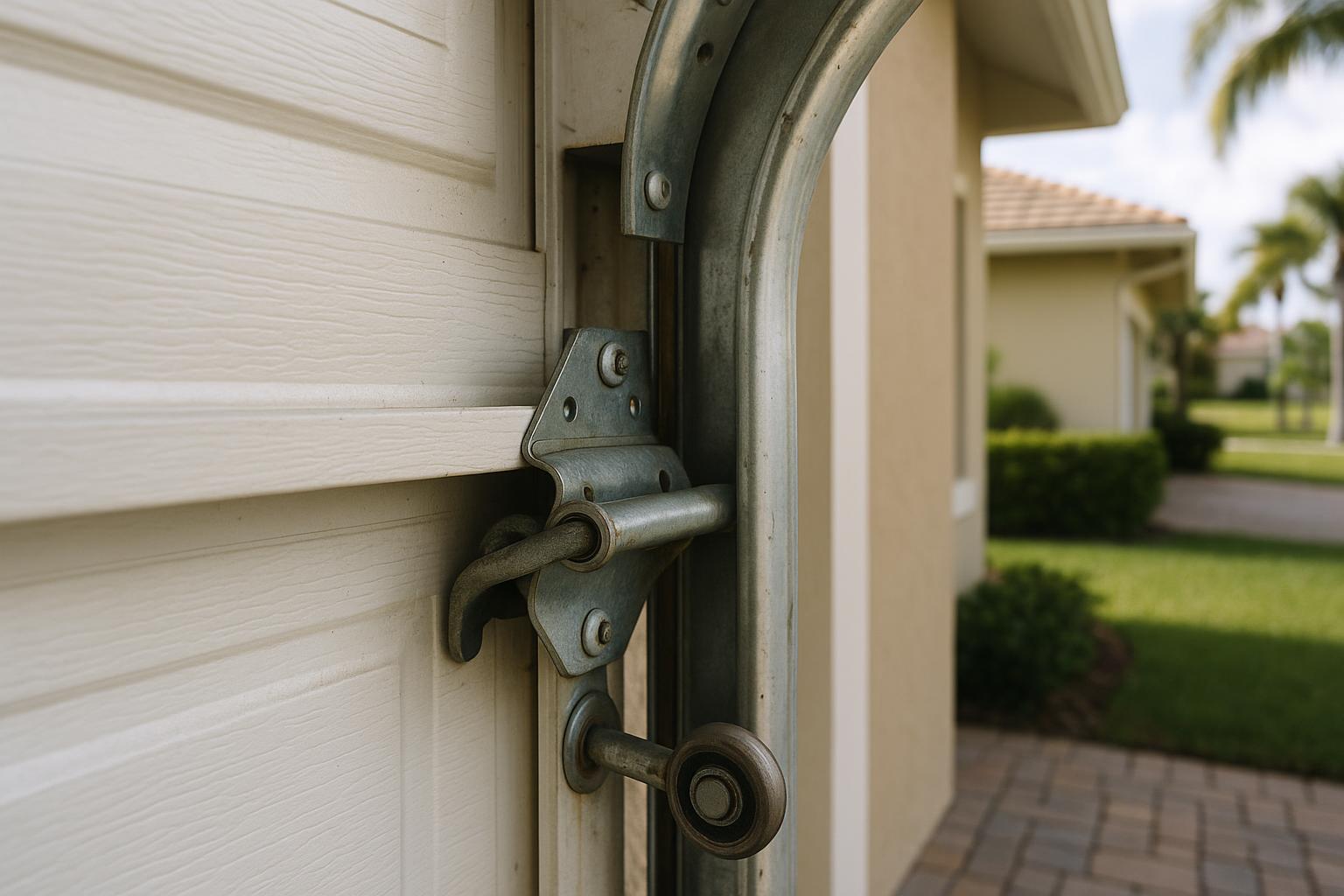
One of the most common causes of a noisy garage door is worn-out rollers. Garage door rollers guide the door along the tracks as it opens and closes. Over time, these rollers wear down, develop flat spots, or lose their lubrication. When that happens, you'll hear a grinding or squealing sound every time the door moves.
There are two main types of rollers: steel and nylon. Steel rollers are durable but tend to be louder, especially when they start to wear. Nylon rollers are significantly quieter and don't require as much lubrication, making them a popular upgrade for homeowners who want a smoother, quieter operation.
What to do: If your rollers are visibly worn, cracked, or no longer rolling smoothly, it's time for a replacement. A garage door technician can swap them out quickly and recommend the best type for your setup. In between replacements, applying a garage door-specific lubricant to the rollers every few months can help reduce noise.
2. Loose Hardware
Your garage door moves up and down hundreds of times a year. All that motion creates vibration, and vibration loosens hardware over time. Nuts, bolts, screws, and brackets can gradually work themselves loose, leading to rattling and shaking sounds during operation.
This is one of the simpler problems to address, but it shouldn't be ignored. Loose hardware can cause parts to shift out of alignment, which creates bigger mechanical issues if left unchecked.
What to do: Periodically inspect the brackets, hinges, and track mounts on your garage door. Tighten anything that feels loose using a socket wrench. However, be careful around the bottom brackets connected to the cables — these are under extreme tension and should only be handled by a trained professional.
3. Unbalanced or Misaligned Tracks
The metal tracks on either side of your garage door need to be properly aligned for the door to travel smoothly. If a track gets bumped, bent, or shifts over time, the door can scrape or rub against it, producing a grinding or scraping noise. In some cases, you might also notice the door hesitating or jerking as it moves.
In the Panama City Beach area, temperature fluctuations and the settling of homes built on sandy soil can sometimes contribute to track misalignment over time.
What to do: Visually inspect the tracks for gaps between the rollers and the rail, or look for obvious bends or dents. Minor adjustments can sometimes be made by loosening the track brackets and gently tapping the track back into position. For significant misalignment, it's best to have a professional handle the adjustment to avoid making the problem worse.
4. Worn or Failing Garage Door Opener
If the noise seems to be coming from the ceiling-mounted motor unit rather than the door itself, your garage door opener may be the culprit. Chain-drive openers are the most common type and also the loudest. Over time, the chain can loosen and slap against the rail, creating a loud, rhythmic banging or rattling sound.
Even belt-drive and screw-drive openers can develop noise issues as their internal gears wear down. A straining or humming motor is a sign that the opener is working harder than it should, which could mean the motor is nearing the end of its life.
What to do: If you have a chain-drive opener, check the chain tension and tighten it according to the manufacturer's guidelines. Lubricating the chain can also help. If the motor itself sounds strained or the opener is more than 15 years old, it may be time to consider a replacement. Modern belt-drive openers are dramatically quieter and come with features like smartphone connectivity and battery backup — a real advantage during storm season here on the Gulf Coast.
5. Lack of Regular Lubrication
This might be the simplest issue on the list, but it's one of the most overlooked. Garage doors have many moving metal parts — springs, hinges, rollers, bearings, and tracks — that need regular lubrication to operate quietly and efficiently. When these parts run dry, metal grinds against metal, producing squealing, creaking, and grinding noises.
The coastal environment around Panama City Beach makes this even more critical. Salt air accelerates corrosion on metal components, which increases friction and noise. Regular lubrication not only quiets the door but also extends the life of these parts by protecting them from rust.
What to do: Use a silicone-based or lithium-based garage door lubricant — not WD-40, which is a solvent and not a long-term lubricant. Apply it to the springs, hinges, rollers, and bearing plates every three to six months. This simple maintenance step takes less than ten minutes and can make a dramatic difference in how your door sounds and performs.
When to Call a Professional
Some garage door noises point to minor issues you can handle yourself with a wrench and a can of lubricant. But others signal problems that require professional tools and expertise. Here are a few signs it's time to call in a technician:
- The noise is accompanied by the door shaking, jerking, or moving unevenly
- You notice a broken or visibly damaged spring
- The door feels significantly heavier than usual when operated manually
- The opener motor runs but the door doesn't move
- You hear a loud bang or snap — this could indicate a spring has broken
Garage door systems involve heavy components under high tension. Attempting to repair springs, cables, or drums without proper training can result in serious injury.
Keep Your Garage Door Running Quietly
A noisy garage door is more than a nuisance — it's a signal that your door needs some attention. Whether it's a simple lubrication issue or a sign of worn-out components, addressing the problem early saves you money and prevents unexpected breakdowns.
At Panama City Beach Garage & Gate, we help homeowners across Panama City Beach, Lynn Haven, Springfield, and the surrounding communities keep their garage doors in top shape. Whether you need a quick tune-up, a roller replacement, or a full opener upgrade, our team is here to help. If your garage door is making sounds it shouldn't, give us a call and we'll diagnose the problem and get things running smoothly again.