
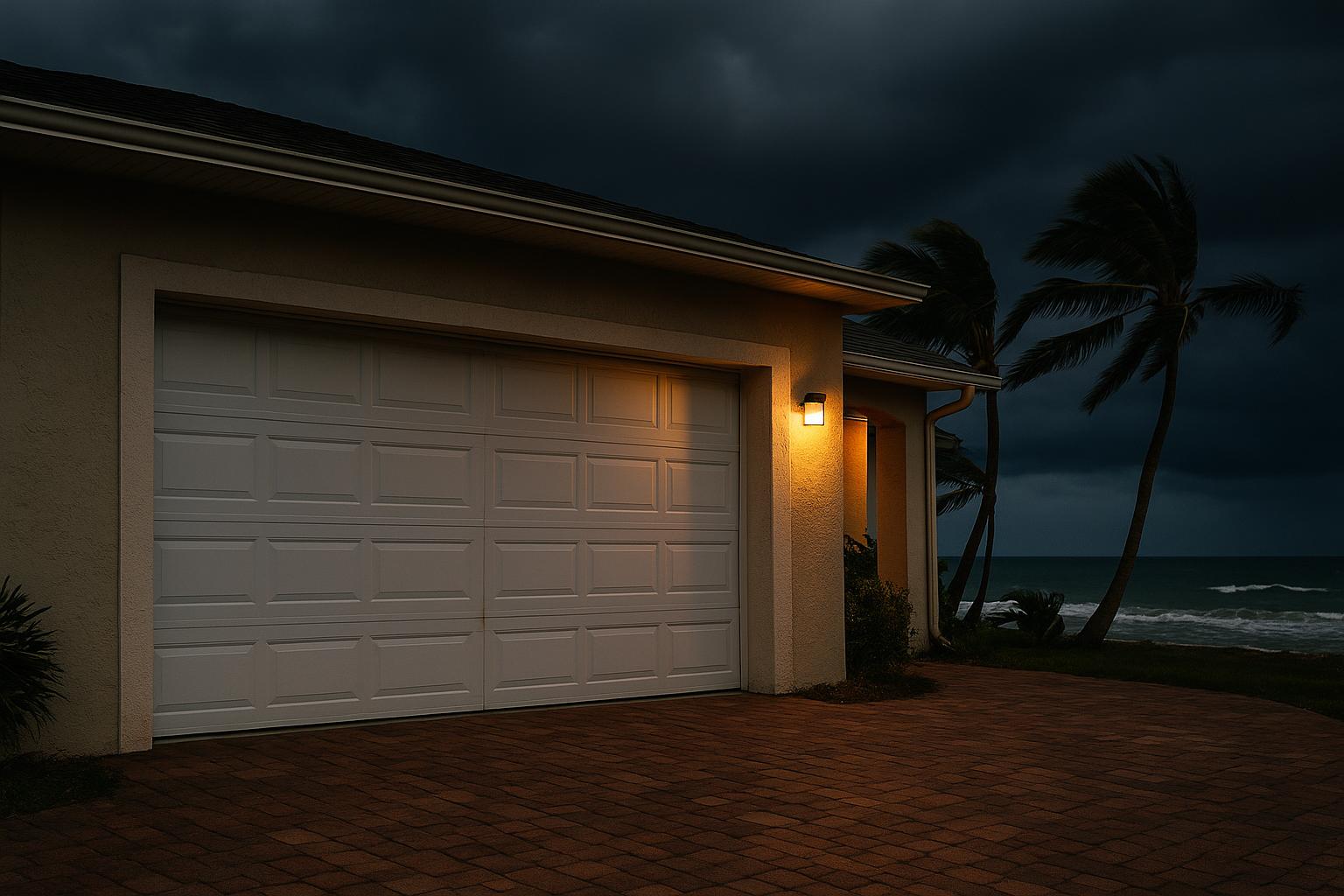
Your Garage Door Is Your Home's Weakest Link in a Storm
If you've lived in Panama City Beach for any length of time, you know that hurricane season isn't something to take lightly. From June through November, the Gulf Coast faces the very real threat of tropical storms and hurricanes — and your garage door is one of the most vulnerable points on your home.
Most people focus on boarding up windows and stocking up on supplies, but the garage door is actually the largest opening on most homes. If it fails during a storm, wind can rush inside, pressurize the structure, and potentially blow off the roof or collapse walls. That's not an exaggeration — it's exactly what happened to countless homes during Hurricane Michael in 2018.
The good news is that there are practical, affordable steps you can take right now to reinforce your garage door and give your home a much better chance of surviving the next big storm.
Why Garage Doors Are So Vulnerable to High Winds
Standard garage doors are designed to open and close reliably under normal conditions. They're not engineered to withstand 100+ mph winds unless they've been specifically rated or reinforced for hurricane conditions.
Here's what happens during a hurricane:
- Wind pressure builds against the door. A standard two-car garage door presents a massive surface area — roughly 16 feet wide and 7 feet tall — for wind to push against.
- The door bows inward or gets ripped off its tracks. Once the door gives way, wind enters the garage and creates intense upward pressure on the roof.
- Flying debris acts like a battering ram. Even if the wind alone wouldn't break through, airborne debris can punch holes in a non-reinforced door.
Understanding these risks is the first step toward doing something about them.
Option 1: Install a Wind-Rated Garage Door
If your garage door is older or wasn't built to withstand hurricane-force winds, the single best investment you can make is replacing it with a wind-rated or impact-rated garage door. These doors are specifically tested and certified to handle the wind speeds and debris impacts common during Gulf Coast hurricanes.
Wind-rated garage doors feature:
- Heavier-gauge steel or reinforced aluminum construction
- Impact-resistant panels that can absorb hits from flying debris
- Stronger hardware, including heavy-duty hinges, brackets, and rollers
- Reinforced tracks and struts built into the door's design
In Panama City Beach and surrounding areas like Lynn Haven, Springfield, and Callaway, many homeowners upgraded to wind-rated doors after Hurricane Michael. If you haven't made the switch yet, now is the time — not when a storm is bearing down on the coast.
What to Look For
When shopping for a hurricane-rated garage door, look for doors that meet the Florida Building Code's High-Velocity Hurricane Zone (HVHZ) requirements or have been tested to Miami-Dade County standards, which are among the strictest in the country. Your installer should be able to provide documentation of the door's wind load rating.
Option 2: Add a Garage Door Bracing Kit
If replacing your entire garage door isn't in the budget right now, a bracing kit is a solid intermediate solution. These kits add horizontal reinforcement bars (also called struts) across the back of your existing garage door panels, significantly increasing the door's ability to resist wind pressure.
A professional bracing kit installation typically includes:
- Horizontal struts bolted across each panel of the door
- Vertical bracing bars that connect to the floor and header
- Reinforced end hinges and center brackets
Bracing kits won't make a standard door as strong as a purpose-built wind-rated door, but they dramatically improve its performance in moderate to strong storms. For homeowners in Panama City who want meaningful protection without a full door replacement, this is a practical choice.
Option 3: Temporary Hurricane Panels
Some homeowners opt for removable hurricane panels that mount over the garage door opening when a storm approaches. These are typically made of steel, aluminum, or polycarbonate and bolt into pre-installed tracks around the door frame.
The advantage is cost — temporary panels are less expensive than a full door replacement. The downside is that you need time to install them before the storm arrives, and you need a place to store them during the rest of the year. If you go this route, practice putting them up before hurricane season so you're not figuring it out under pressure.
Don't Forget Regular Maintenance
Even if you have a wind-rated door, it won't perform at its best if it hasn't been properly maintained. A garage door that's out of alignment, has worn-out rollers, or has corroded hardware is more likely to fail under stress.
Before hurricane season each year, schedule a maintenance tune-up that includes:
- Inspecting and tightening all bolts, brackets, and hinges
- Checking the tracks for alignment and damage
- Lubricating all moving parts
- Testing the balance and tension of the springs
- Inspecting the weatherstripping and bottom seal
Think of it like a pre-storm checkup for one of the most important barriers on your home. A little preventive care goes a long way when the wind starts howling.
What About Your Garage Door Opener?
Your garage door opener plays a role in storm preparedness too. During a hurricane, you should disengage the automatic opener and lock the door manually. Here's why:
- Power outages are almost guaranteed during a major storm. If the opener loses power, you can't operate the door electronically anyway.
- The manual lock provides a more secure hold than the opener's locking mechanism alone.
- Some openers have a battery backup feature, which is great for everyday power outages but shouldn't be relied on as your primary defense during a hurricane.
If you're not sure how to disengage your opener or manually lock your garage door, your technician can walk you through it during a service visit.
Insurance Considerations
Here's something many Panama City Beach homeowners don't realize: upgrading to a wind-rated garage door may qualify you for a discount on your homeowner's insurance. Florida insurers often offer wind mitigation credits for homes that meet certain structural standards, and a hurricane-rated garage door can be part of that equation.
Ask your insurance agent about wind mitigation inspections and what upgrades could lower your premium. In many cases, the insurance savings help offset the cost of the new door over time.
Start Preparing Now — Not When the Storm Is Coming
Every year, we see a rush of calls from homeowners across Panama City Beach, Parker, and the surrounding communities once the first tropical storm forms in the Gulf. By that point, supply chains are strained, schedules are packed, and options are limited.
The best time to reinforce or replace your garage door is before you need it. Whether you're looking at a full wind-rated door installation, a bracing kit, or just a thorough pre-season tune-up, getting it done early gives you peace of mind and ensures the work is done right — not rushed.
At Panama City Beach Garage & Gate, we help homeowners and businesses across the area prepare their garage doors for whatever the Gulf throws our way. If you're not sure where your current door stands, give us a call for an honest assessment and a clear explanation of your options. Protecting your home starts with knowing what you're working with.