
Your Garage Door Springs Are Doing More Work Than You Think
Most homeowners in Panama City Beach don't think much about their garage door springs — until the morning they press the opener button and nothing happens. Or worse, they hear a loud bang from the garage that sounds like a gunshot.
Garage door springs are the unsung heroes of your entire door system. They bear the full weight of the door — often 150 to 250 pounds or more — and make it possible for your opener to lift and lower it smoothly. When those springs wear out or snap, your garage door essentially becomes a giant, immovable wall.
The good news is that failing springs almost always give warning signs before they break completely. Knowing what to look for can save you from an emergency situation and help you schedule a replacement on your terms.
How Garage Door Springs Work
Before diving into the warning signs, it helps to understand the two main types of garage door springs:
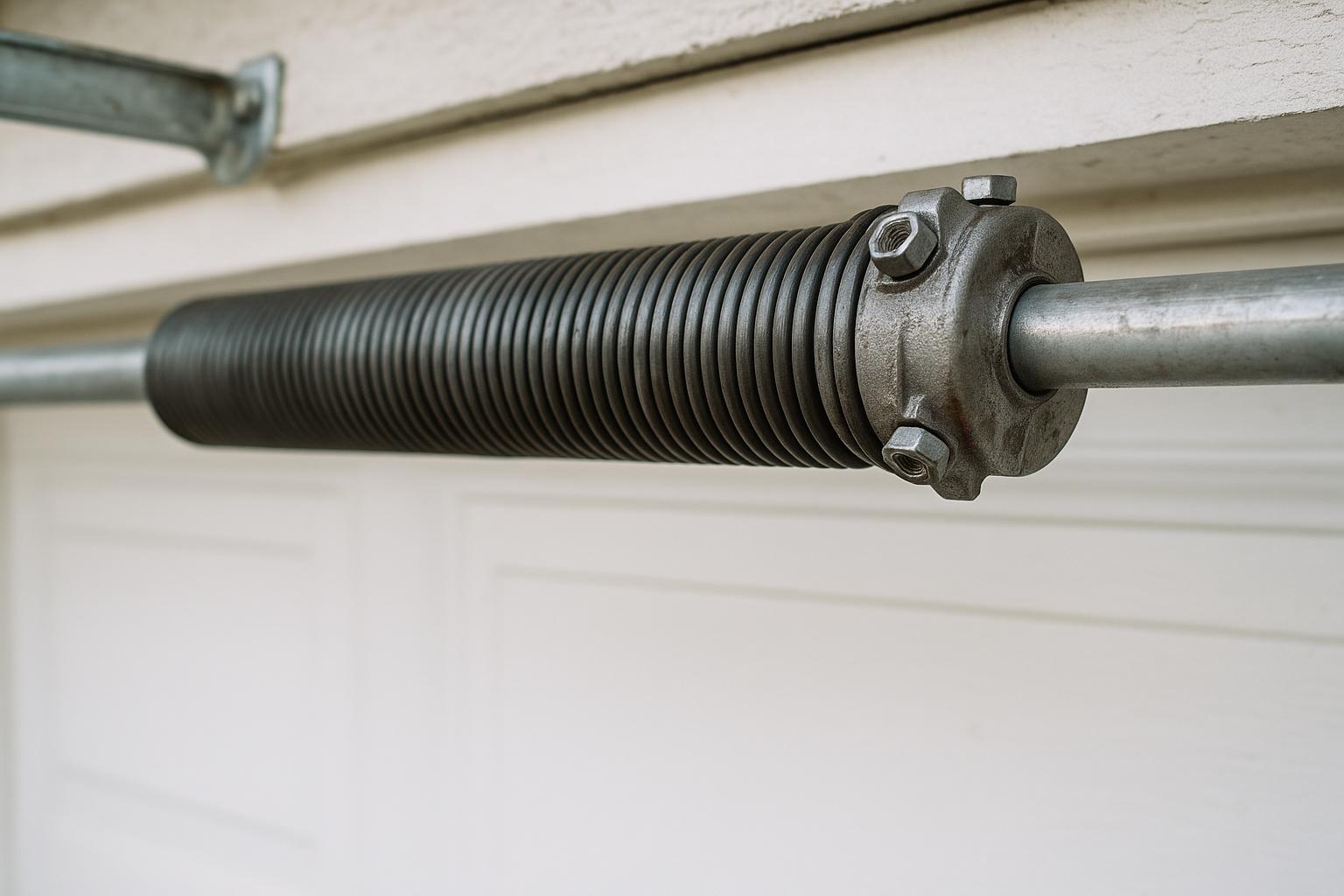
- Torsion springs are mounted on a metal shaft above the door opening. They use torque to lift the door and are the most common type found on modern residential garage doors.
- Extension springs run along the horizontal tracks on both sides of the door. They stretch and contract to assist with lifting. These are more common on older or lighter doors.
Both types are under extreme tension, which is why spring replacement is one of the most dangerous garage door repairs to attempt on your own. But recognizing when they need attention is something every homeowner should know how to do.
Warning Signs Your Springs Are Wearing Out
1. The Door Feels Heavier Than Usual
Try this simple test: disconnect your garage door from the opener by pulling the emergency release cord, then manually lift the door about halfway. A properly balanced door with healthy springs should stay in place on its own. If it feels extremely heavy, slides back down, or is difficult to lift at all, your springs are likely losing their tension.
This is one of the earliest and most reliable signs of spring fatigue, and it's especially worth checking if your door has been in service for several years.
2. The Door Opens Unevenly or Crooked
If your garage door tilts to one side as it opens or closes, one of your springs may be weaker than the other — or one may have already broken. This is particularly common with extension spring systems where each side operates somewhat independently. An uneven door puts extra strain on your tracks, rollers, and opener, which can lead to a cascade of additional problems.
3. You Hear Loud Squeaking or Grinding
Some noise during operation is normal, but loud squeaking, popping, or grinding sounds can indicate that your springs are corroded, dry, or deformed. The salt air and humidity here in Panama City Beach accelerate rust and corrosion on metal components, which means springs in our area often wear out faster than they would in drier climates.
4. Visible Gaps in the Spring Coils
Take a look at your torsion spring above the door. A healthy spring has tightly wound coils with uniform spacing. If you see a visible gap — a section where the coils have separated — the spring has already snapped. Even if your door still opens, it's operating under dangerous conditions and needs immediate professional attention.
5. The Opener Struggles or Stops Mid-Cycle
Your garage door opener is designed to work with the springs, not to do all the heavy lifting on its own. If your opener strains, moves the door slowly, or stops partway through the cycle, worn springs may be forcing it to work overtime. Continuing to use the opener in this state can burn out the motor and leave you facing a much more expensive repair.
6. The Door Slams Shut Quickly
Springs control the speed at which your door closes. When they lose tension, the door can drop much faster than it should. This is a serious safety hazard, especially for families with children or pets who may be near the door during operation.
How Long Do Garage Door Springs Last?
Most standard garage door springs are rated for approximately 10,000 cycles — one cycle being a single open-and-close operation. For the average household that uses the garage door two to four times per day, that works out to roughly seven to ten years of service life.
However, several factors can shorten that lifespan:
- Coastal humidity and salt air: Living near the Gulf means your metal components face constant exposure to moisture and salt, which accelerates corrosion. Homeowners across Panama City Beach, Lynn Haven, and Callaway often see spring failure earlier than the national average.
- Lack of maintenance: Springs that are never lubricated or inspected will deteriorate faster.
- Improper installation: Springs that weren't correctly sized or installed for your specific door will wear out prematurely.
Can You Replace Garage Door Springs Yourself?
We strongly advise against it. Garage door springs are under tremendous tension, and an improper release can cause serious injury or even death. There are well-documented cases of DIY spring replacements resulting in broken bones, lacerations, and worse.
Professional technicians have the tools, training, and experience to safely remove old springs and install new ones that are correctly sized for your door's weight and dimensions. It's one of those jobs where the risk simply isn't worth the savings.
What to Expect During a Professional Spring Replacement
When you call a professional for spring replacement, here's what typically happens:
- A technician inspects your door system, including the springs, cables, drums, and hardware.
- They identify the correct spring size and type for your door.
- The old springs are safely unwound and removed.
- New springs are installed, wound to the proper tension, and tested.
- The entire door is balanced and tested for smooth, safe operation.
The whole process usually takes about an hour for a standard residential door. Many homeowners in Panama City and Springfield are surprised at how quickly the job gets done once a pro is on-site.
Protect Your Investment With Regular Maintenance
The best way to extend the life of your garage door springs — and your entire door system — is with regular maintenance. A professional tune-up once or twice a year includes lubrication of all moving parts, a balance test, a safety inspection, and adjustments as needed. This is especially important in our coastal environment where corrosion is a constant threat.
At Panama City Beach Garage & Gate, we offer maintenance plans designed to catch small issues before they become big problems. Whether you're in Parker, Springfield, or right here on the beach, keeping your springs in good shape means fewer surprises and a longer-lasting garage door.
Don't Wait for the Bang
If you've noticed any of the warning signs listed above, don't wait for a complete spring failure to take action. A broken spring at the wrong time can leave your car trapped in the garage, compromise your home's security, or create a dangerous situation for your family.
Contact Panama City Beach Garage & Gate to schedule a spring inspection or replacement. We serve homeowners and businesses throughout Panama City Beach, Panama City, Lynn Haven, Callaway, Springfield, and Parker with fast, reliable service you can count on.