
A Frustrating Problem That's More Common Than You Think
You press the button on your garage door remote, the door starts its descent, and then — just inches from the ground — it reverses and goes right back up. You try again. Same thing. Maybe it works on the third attempt, maybe it doesn't. Either way, you're left standing in your driveway wondering what's going on.
This is one of the most common garage door complaints we hear from homeowners in Panama City Beach, and the good news is that it's usually fixable without replacing the entire system. The bad news? Ignoring it can lead to bigger, more expensive problems down the road — or worse, a security risk for your home.
Let's walk through the most likely causes and what you can do about each one.
Understanding Your Garage Door's Safety System
Before diving into the causes, it helps to understand why your garage door is designed to reverse in the first place. Modern garage door openers are equipped with two key safety mechanisms mandated by federal law since 1993:
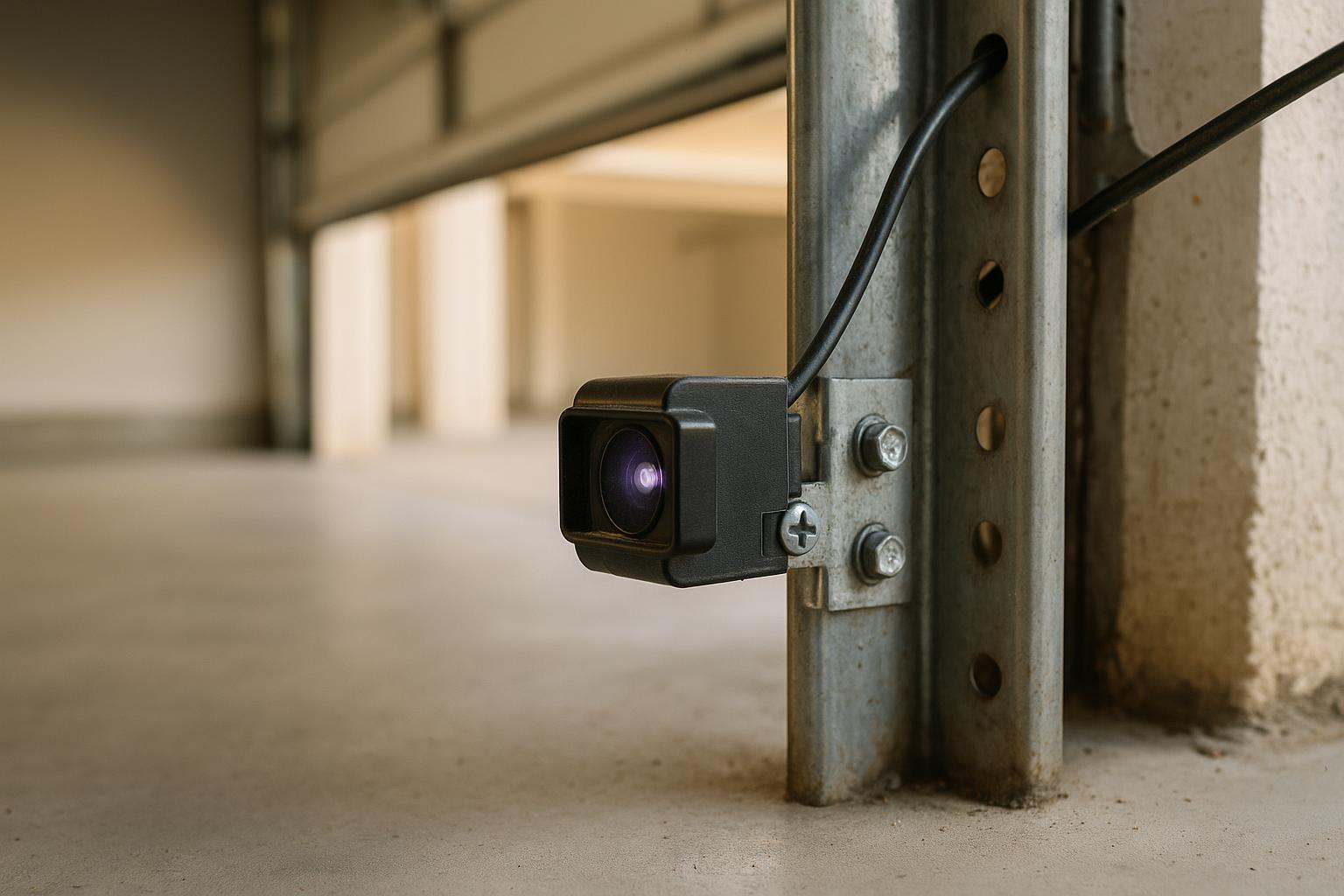
- Photo-eye sensors: Two small sensors mounted near the bottom of the door tracks on either side. They project an invisible infrared beam across the opening. If anything breaks that beam while the door is closing, the door reverses.
- Auto-reverse mechanism: If the door encounters physical resistance while closing — like hitting an object or the floor with too much force — it automatically reverses direction.
Both of these systems exist to prevent injuries and property damage. When your door reverses unexpectedly, one of these systems is almost always involved.
Cause #1: Misaligned Photo-Eye Sensors
This is the number one reason garage doors reverse before reaching the floor. The photo-eye sensors on either side of your garage door opening need to be perfectly aligned to maintain their infrared connection. If one gets bumped, shifted, or tilted even slightly, the system interprets the broken beam as an obstruction and reverses the door.
Here in Panama City Beach, we see this happen frequently after storms, after someone accidentally kicks a sensor while walking through the garage, or even after vibrations from heavy traffic on nearby roads shift things over time.
What to Check
- Look at both sensors. Most have a small LED light — typically green on one side and amber or red on the other. If one light is blinking or off, that sensor is likely misaligned.
- Gently adjust the sensor until the light becomes steady.
- Make sure nothing is blocking the beam path — cobwebs, dirt, leaves, or stored items can all interfere.
- Clean the sensor lenses with a soft cloth. Salt air and humidity along the coast can cause buildup over time.
Cause #2: Incorrect Close-Limit Settings
Your garage door opener has close-limit settings that tell the motor exactly how far the door should travel before it's considered fully closed. If these settings are off, the opener may think the door is hitting an obstruction when it's actually just reaching the floor. The auto-reverse kicks in, and the door goes back up.
This issue often appears after a new opener installation, after a power outage resets the system, or simply because the settings have drifted over time due to normal wear and tear on the door's components.
What to Do
Most openers have adjustment screws or digital settings for the close limit. Your owner's manual will show you where these are and how to adjust them. The goal is to set the limit so the door closes fully against the floor without the motor continuing to push after contact. If you're not comfortable making this adjustment yourself, a professional tune-up can take care of it quickly.
Cause #3: Worn or Damaged Tracks
The metal tracks that guide your garage door up and down need to be clean, straight, and properly aligned. Dents, bends, rust, or debris in the tracks can create resistance that triggers the auto-reverse mechanism. In coastal areas like Panama City Beach, salt air accelerates corrosion on metal components, making track issues more common than in inland communities.
Inspect your tracks visually for any obvious damage. You can clean out minor debris yourself, but bent or rusted tracks should be handled by a professional to avoid further damage to the door or opener.
Cause #4: Broken or Worn Springs
Your garage door springs do the heavy lifting — literally. They counterbalance the weight of the door so the opener doesn't have to work as hard. When springs weaken, stretch out, or break, the door becomes significantly heavier for the opener to manage. This extra weight can trigger the auto-reverse because the opener senses more resistance than it's programmed to handle.
Spring issues are not a DIY repair. Garage door springs are under extreme tension and can cause serious injury if handled improperly. If you suspect a spring problem — you might notice the door feels heavier when operated manually, or you see a visible gap in one of the springs — call a professional right away.
Cause #5: Opener Motor Issues
If your garage door opener is aging, the motor itself may be struggling. An underpowered or failing motor can't generate enough force to close the door smoothly, which can mimic the symptoms of other problems. Most residential garage door openers last 10 to 15 years, though the heat and humidity we experience here on the Gulf Coast can shorten that lifespan.
If your opener is more than a decade old and you've ruled out the other causes on this list, it may be time to consider a replacement. Newer models are quieter, more energy-efficient, and come with features like smartphone connectivity and battery backup.
Cause #6: Wiring Problems
Less common but worth mentioning — damaged or frayed wiring between the opener and the sensors can cause intermittent reversing issues. Rodents, moisture, and general wear can all compromise wiring over time. If your door reverses inconsistently and you can't find another explanation, a wiring inspection may reveal the culprit.
When to Call a Professional
Some of these issues — like cleaning sensor lenses or clearing debris from tracks — are simple enough for most homeowners to handle. But others, especially spring replacement, track realignment, and opener motor problems, require professional tools and expertise.
At Panama City Beach Garage & Gate, we diagnose and repair reversing issues regularly for homeowners across Panama City Beach, Lynn Haven, Springfield, Callaway, and Parker. Our technicians can pinpoint the exact cause quickly and get your door working reliably again, often in a single visit.
Don't Ignore a Reversing Garage Door
A garage door that won't close properly is more than an inconvenience. It's a security vulnerability. An open garage is an invitation for theft, and it exposes your home's interior to weather, pests, and humidity damage. If your door has been reversing and you haven't been able to fix it yourself, don't wait for the problem to escalate.
Give us a call or schedule a service appointment online. We'll get your garage door closing the way it should — every single time.